

All of my OpenAPI pages are completely blank
All of my OpenAPI pages are completely blank
In this scenario, it’s likely that either Mintlify cannot find your OpenAPI document,
or your OpenAPI document is invalid.Running 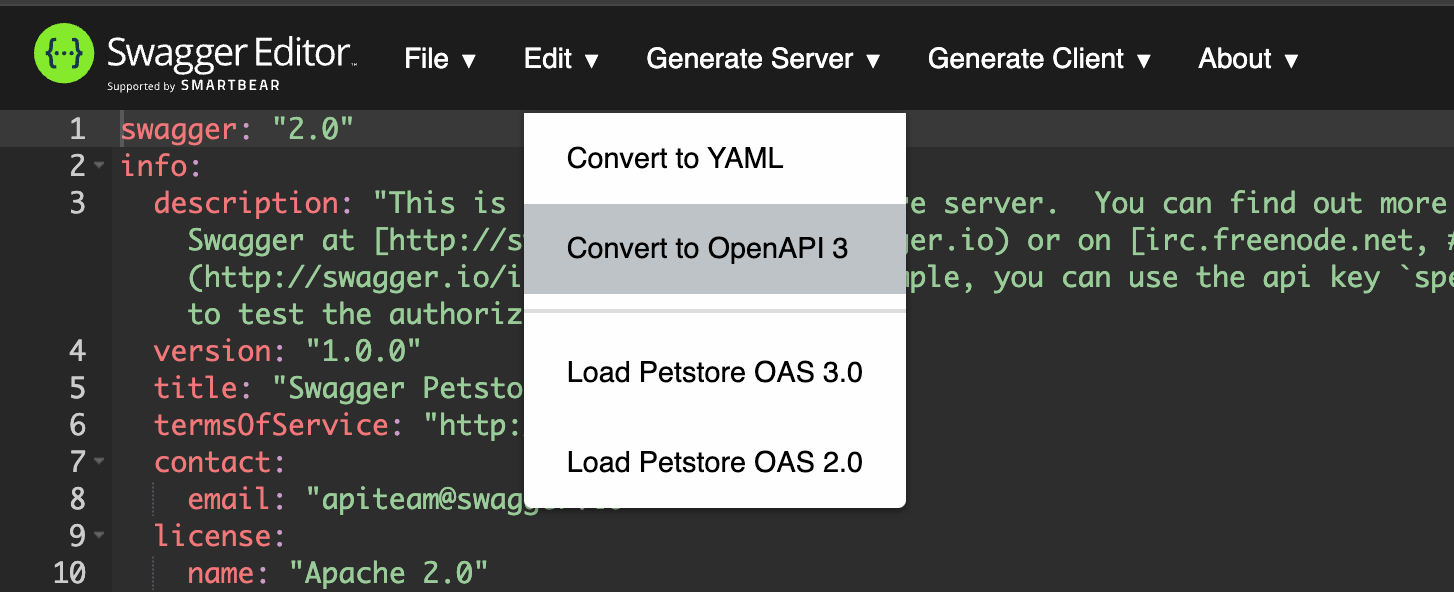
mint dev locally should reveal some of these issues.To verify your OpenAPI document passes validation:- Visit this validator.
- Switch to the Validate text tab.
- Paste in your OpenAPI document.
- Click Validate it!
One of my OpenAPI pages is completely blank
One of my OpenAPI pages is completely blank
This is usually caused by a misspelled Here’s an example of how things might go wrong:Notice that the path in the
openapi field in the page metadata. Make sure
the HTTP method and path match the HTTP method and path in the OpenAPI document.Mintlify automatically resolves trailing slash differences between your
openapi reference
and the OpenAPI specification. For example, GET /users/{id}/ matches a specification path of /users/{id}.get-user.mdx
openapi.yaml
openapi field says /user/{id} (singular), whereas the path in the OpenAPI
document is /users/{id} (plural).Another common issue is a misspelled filename. If you are specifying a particular OpenAPI document
in the openapi field, ensure the filename is correct. For example, if you have two OpenAPI
documents openapi/v1.json and openapi/v2.json, your metadata might look like this:api-reference/v1/users/get-user.mdx
My build fails with "Failed to fetch OpenAPI file for anchor or tab"
My build fails with "Failed to fetch OpenAPI file for anchor or tab"
This error means Mintlify could not download the OpenAPI document at the URL in your Then validate the downloaded document locally with the Mint CLI:If the URL is not reachable from the public internet, or is only reachable with credentials, switch to one of these patterns:
docs.json openapi field during the build. Common causes include:- The host is unreachable or resolves only from a private network.
- The URL requires authentication (a token, session cookie, or IP allowlist).
- The certificate is invalid or the domain has a DNS issue.
- The origin returned a transient 5xx or timed out.
- The spec was being republished at the moment the build ran, so the URL served a partial or empty response.
- Commit the spec into your docs repo. This is the recommended pattern when the source URL is behind auth. Point the
openapifield at the repo-relative path (for example,"openapi": "openapi.json") and update the file in the same commit that changes your API. - Serve the spec from a stable public HTTPS URL. Host it on a CDN or object storage bucket that does not require auth, has a valid TLS certificate, and returns the full document on every request.
Requests from the API Playground don't work
Requests from the API Playground don't work
If you have a custom domain configured, this could be an issue with your reverse proxy. By
default, requests made via the API Playground start with a
POST request to the
/_mintlify/api/request path on the docs site. If you configure your reverse proxy to only allow GET
requests, then all of these requests fail. To fix this, configure your reverse proxy to
allow POST requests to the /_mintlify/api/request path.Alternatively, if your reverse proxy prevents you from accepting POST requests, you can configure Mintlify to send requests directly to your backend with the api.playground.proxy setting in the docs.json. See the settings documentation for details. When using this configuration, you must configure CORS on your server since requests come directly from users’ browsers rather than through your proxy.